
The design of metal structures requires the correct selection of support components to guarantee the safety of the assembly. Tubular steel profiles are the most widely used thanks to their high torsional strength and ease of welding. To purchase profiles with precise cuts ready for assembly, consult a manufacturer of modular metal structures.
Mechanical properties and force distribution
The geometry of the cross-section determines how the metal reacts to weight, bending and tensile loads in the installation.
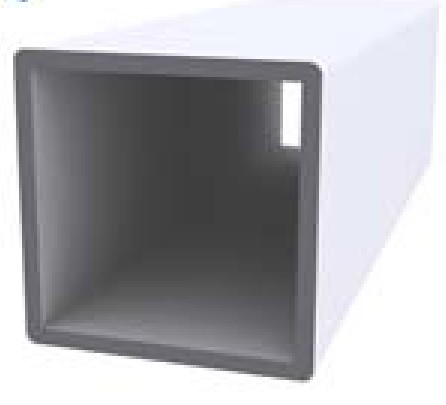
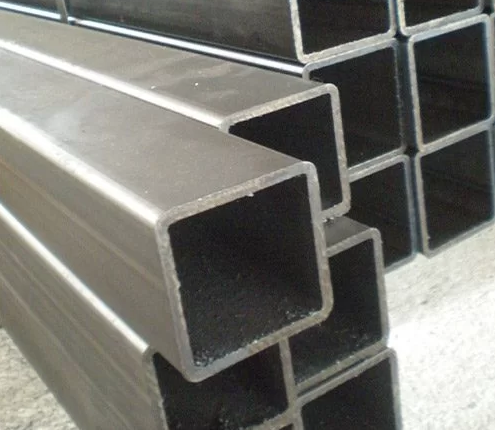
Characteristics of square tubing
-
•
Perfect symmetry: It withstands identical loads from any horizontal or vertical angle. -
•
Clean aesthetics: Ideal for visible columns, fence posts and outdoor furniture. -
•
Easy assembly: Its four equal sides simplify mitre cuts and joints.
Performance under different types of stress
| Type of stress | Square section profile | Rectangular section profile |
|---|---|---|
| Pure vertical load | Excellent stability | Requires correct orientation |
| Lateral bending | Medium resistance | Very high (on its major axis) |
| Torsion or twist | Very high resistance | Moderate resistance |
| Weight optimisation | Standard | Efficient in horizontal beams |
Recommended applications in construction
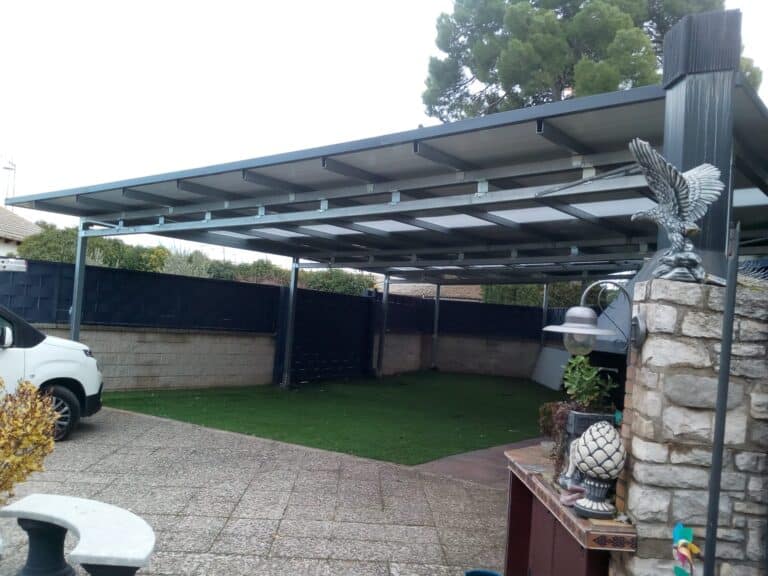
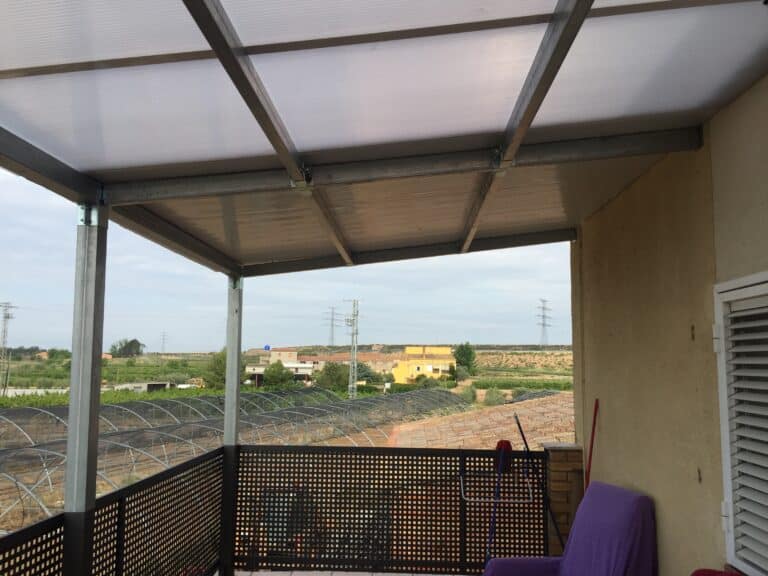
The comparison between square vs rectangular steel profiles shows that each format meets a specific need. Rectangular sections are irreplaceable when they work as main beams, since they are placed in a vertical position to counteract gravity over long spans. Square formats, on the other hand, are the undisputed kings of vertical pillars and perimeter frames.
Combine both profiles in your project: use the square format for support posts and the rectangular one for the upper crosspieces.
Frequently asked questions about square vs rectangular steel profiles
The rectangular profile supports more load if the weight is exerted on its narrower face, taking advantage of the depth.
Both offer the same ease of welding thanks to their flat faces, outperforming traditional round tubes.
With equal wall thickness and weight per linear metre, the manufacturing costs of both formats are very similar.
In lightweight structures and porches, wall thicknesses from 2 mm to 4 mm are usually used.
Yes, as long as they have a galvanising treatment or protective paint to prevent premature oxidation.
Slightly rounded corners facilitate stress distribution, preventing cracks at critical joint points.