
100×100 mm square galvanised tube is the most common section for posts and beams in porches, small sheds, mezzanines and light housing frames. Here are its sizes, the usual wall thicknesses, weight per metre and price in our shop, plus how to join it without welding.
Sizes and wall thicknesses of 100×100 tube
“100×100” is the outside section: 100 mm per side. What changes from one tube to another is the wall thickness, which sets how much it carries and how much it weighs.
| Tube | Wall | Approx. weight | Shop price* |
|---|---|---|---|
| Galvanised tube 100×100 | 2 mm | 6.2 kg/m | €16.94/m |
| Galvanised tube 100×100 | 3 mm | 9.1 kg/m | €19.35/m |
| Galvanised tube 100×50 | 2 mm | 4.6 kg/m | €11.85/m |
| Galvanised tube 50×50 | 1.5 mm | 2.3 kg/m | €7.00/m |
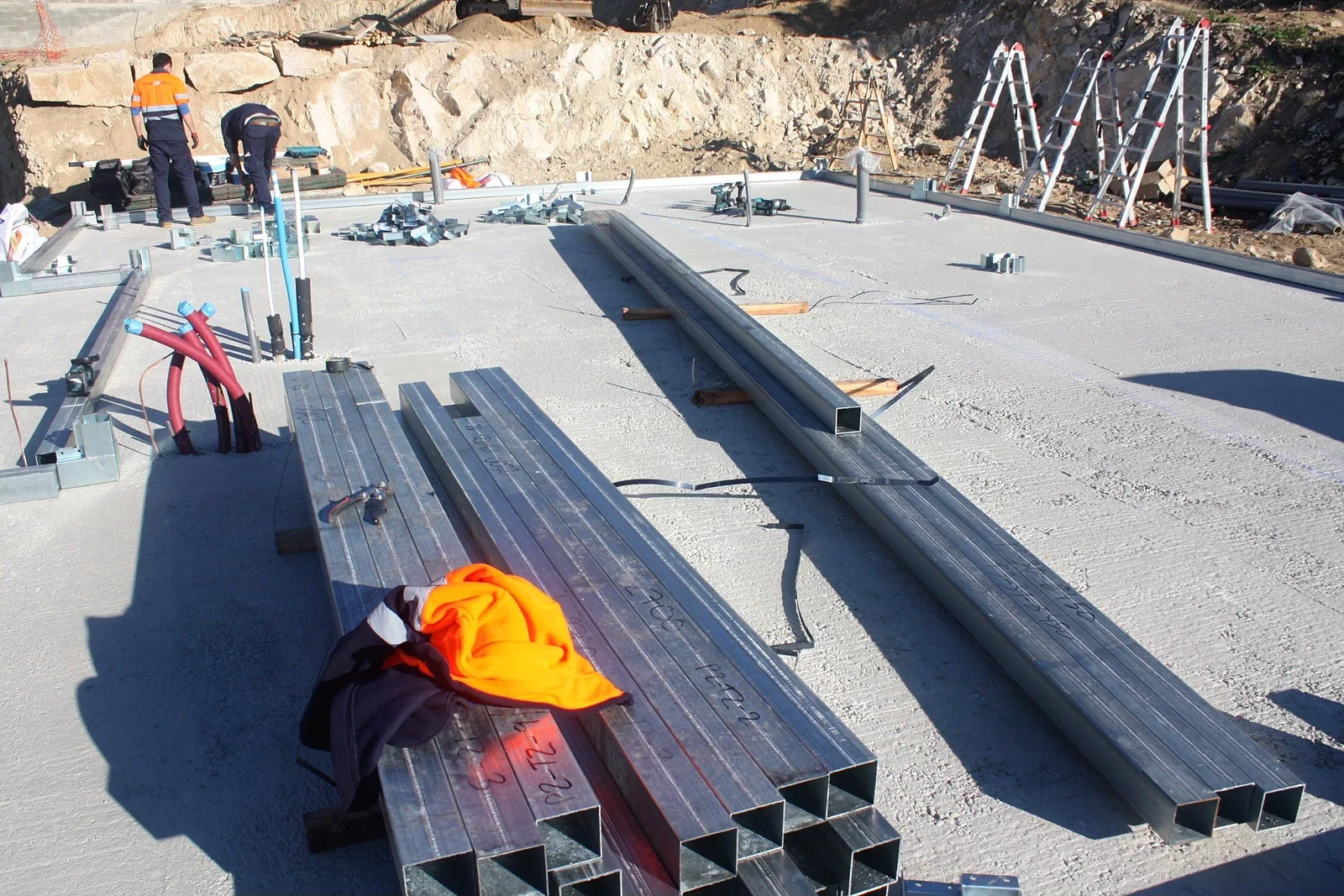
2 mm or 3 mm wall?
- 2 mm: enough for porches, pergolas and light frames with short spans. Lighter and cheaper.
- 3 mm: for longer spans, heavy roofs, snowy or windy areas and more heavily loaded posts.
The final choice is not made by eye: it depends on the spacing between supports, the roof and the loads on site. For houses or sheds, the wall thickness comes from the structural calculation.
Why galvanising matters
Galvanised tube has a zinc coating (zinc-magnesium ZM310 on the 2 and 3 mm 100×100 tube) that protects it from corrosion, so it can stay exposed outdoors without paint. The problem is welding: the heat burns off the zinc around the weld, which then has to be protected again. So if the tube will be outside, it is better to join it without welding.
Quality and certificates of 100×100 tube
The 100×100 tube we use has quality certificates to EN 10204 (type 3.1 for 2 and 3 mm, type 2.2 for 4 mm). The 2 and 3 mm tube is S350GD structural steel tube with ZM310 zinc-magnesium coating, made to EN 10219 with CE marking; according to its certificate, this grade meets S355JR of EN 10219. The 4 mm tube is Z275 galvanised steel tube to EN 10305-5.
| Tube | Steel and coating | Standard | Certificate | Re (MPa) | Rm (MPa) | A (%) |
|---|---|---|---|---|---|---|
| 100×100×2 mm, 12 m | S350GD + ZM310 (zinc-magnesium) | EN 10219-1/-2, CE marked | 3.1 EN 10204 (Feb 2026) | 487 | 511 | 21 |
| 100×100×3 mm, 12 m | S350GD + ZM310 (zinc-magnesium) | EN 10219-1/-2, CE marked | 3.1 EN 10204 (Jan 2026) | 467–549 | 516–615 | 21–26 |
| 100×100×4 mm, 12 m | Galvanised steel Z275 | EN 10305-5 | 2.2 EN 10204 (Mar 2026) | 279–318 (min. 220) | 387–399 (min. 310) | 35–38 (min. 23) |
Joining 100×100 tube without welding
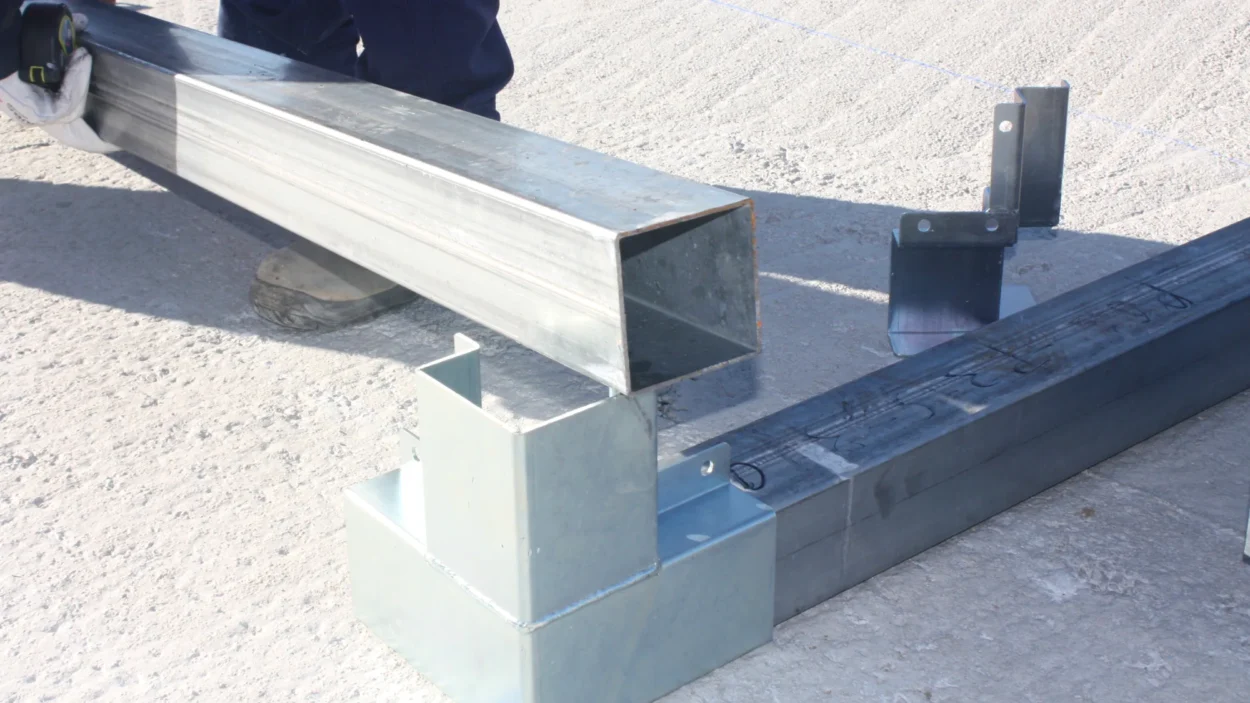
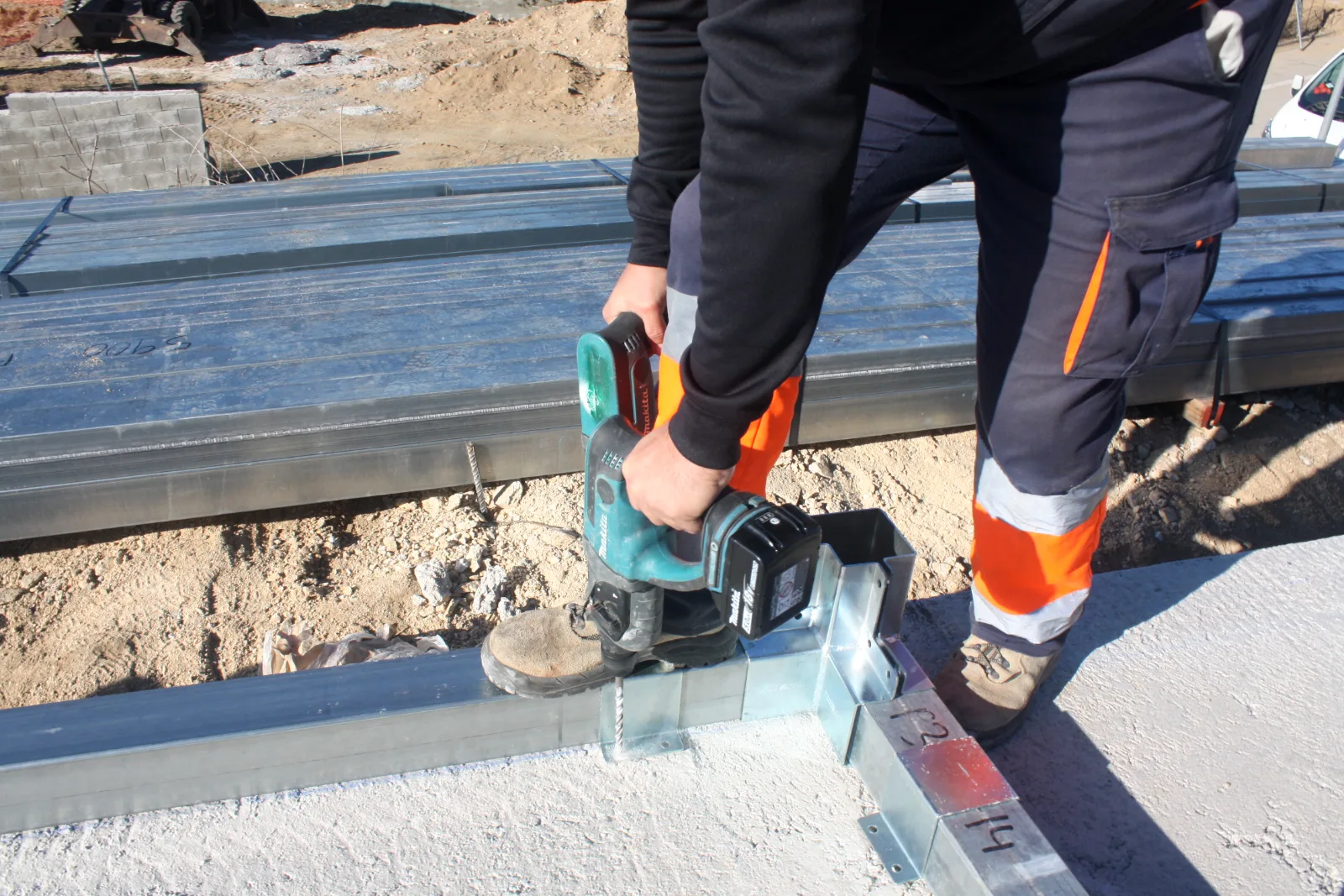
StarModul connectors for 10×10 cm tube handle corners, T-junctions, crossings and changes of pitch. The tube slides into the fitting and is fixed with bolts, with square 90° cuts. That way posts, beams and purlins go together with no welder and no damage to the galvanising.
What 100×100 tube is used for
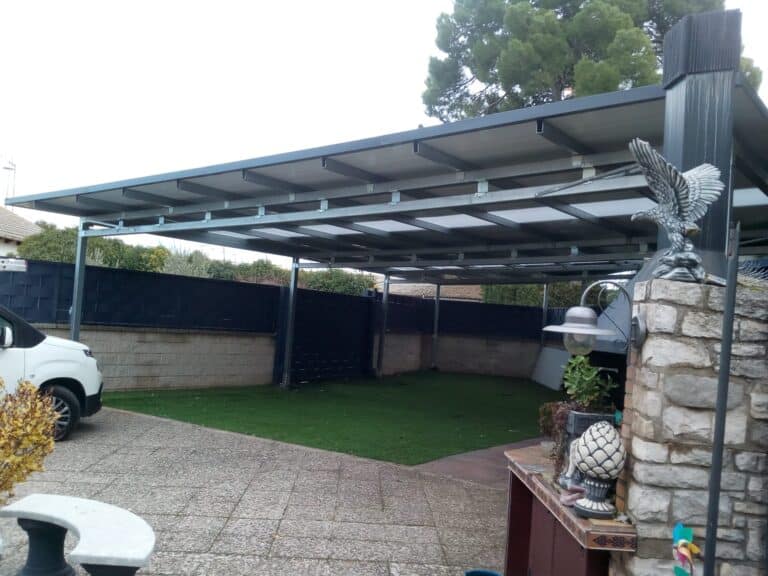
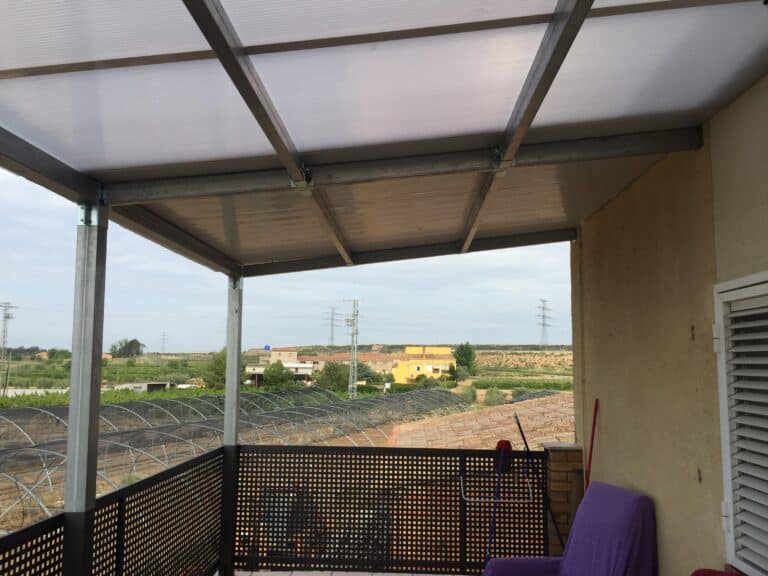
- Posts and beams for porches and pergolas.
- Main frame of steel-framed houses, together with 100×50 mm sections.
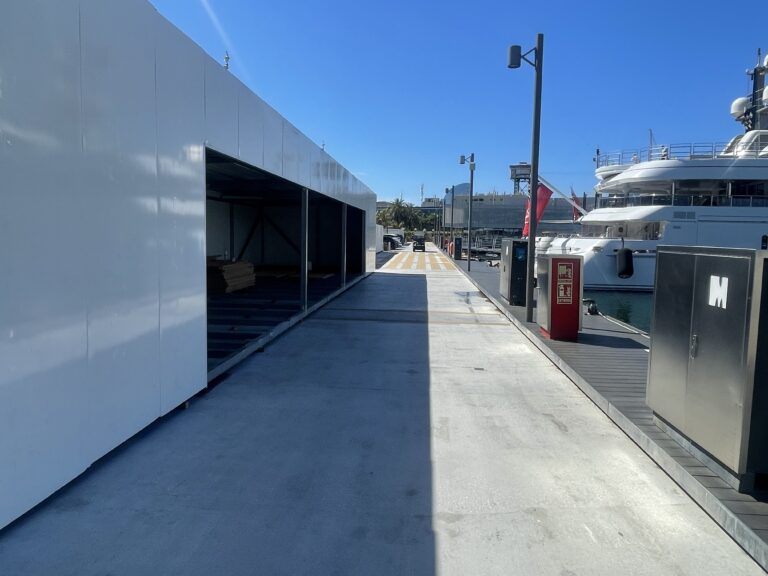
- Small sheds and warehouses.
- Mezzanines and platforms.
- Solar panel frames and roofs.
Work out the materials for your frame
In the 3D configurator you enter the size of your structure and see straight away the tubes and connectors it needs, with a guide price. There are also kits with prices for the most common sizes.
FAQ
How much does 100×100×2 mm tube weigh?
About 6.2 kg per metre. A 12 m length weighs about 74 kg.
How much does 100×100×3 mm tube weigh?
About 9.1 kg per metre, around 109 kg for a 12 m length.
How much does 100×100 galvanised tube cost?
In our shop, €16.94/m for 2 mm and €19.35/m for 3 mm, excluding VAT (October 2026).
Can galvanised tube be welded?
It can, but welding burns off the zinc and that area must be protected afterwards. Bolted connectors avoid it.